




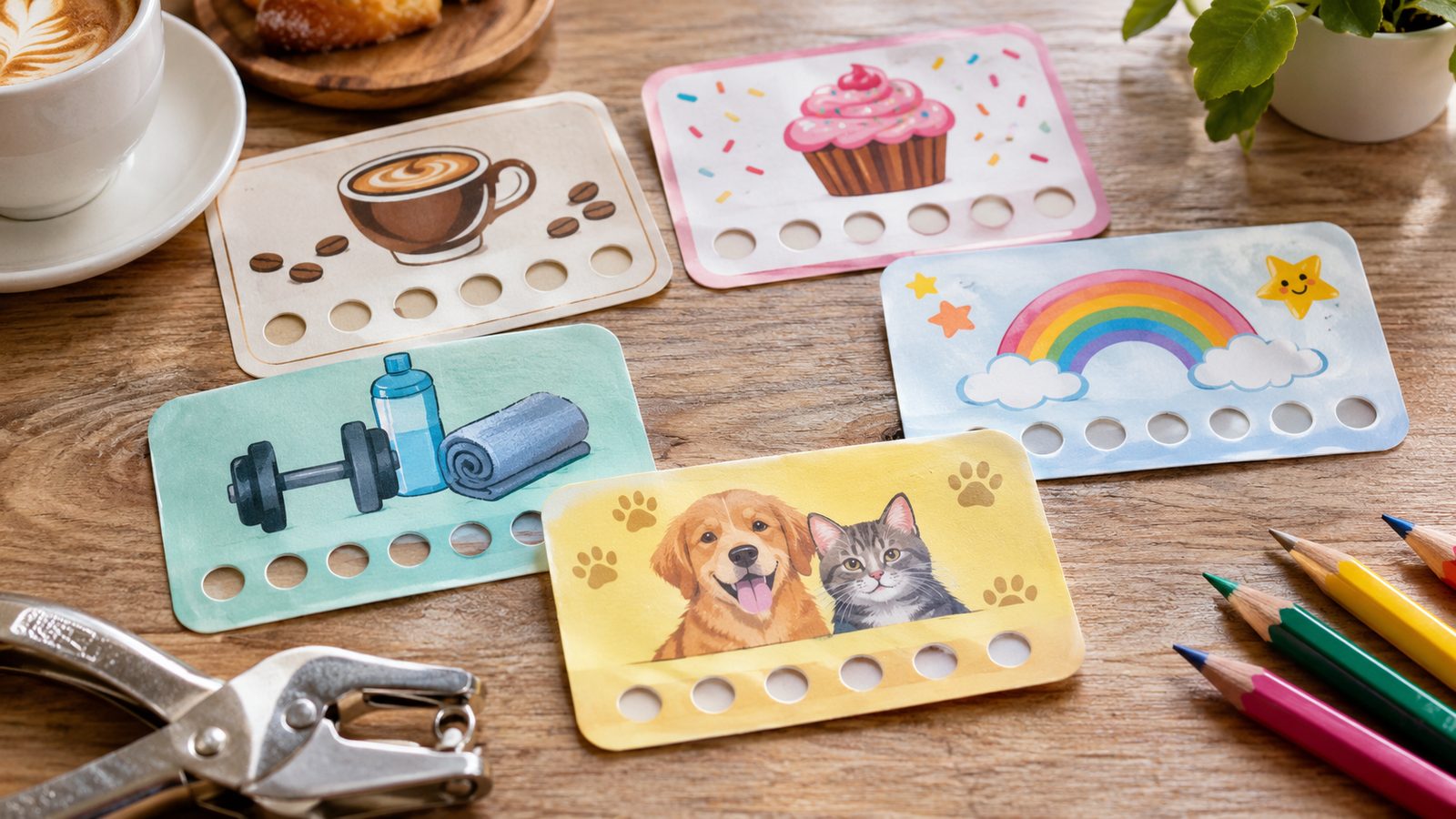
What Is a Punch Card and How Does It Work?
A punch card template gives businesses a simple way to reward repeat customers. Customers collect punches after qualifying purchases or visits and receive a reward after completing the card. Coffee shops, salons, restaurants, and car washes can use this approach to encourage repeat business. A typical loyalty card has eight to twelve spaces, a clearly stated reward, and basic redemption rules. For example, a coffee shop might offer nine paid drinks followed by one free drink. Customers understand the offer quickly, while employees can track progress without complicated software.
Quick Facts
| Feature | Recommended approach |
|---|---|
| Standard U.S. size | 3.5 × 2 inches |
| Common punch count | 8–12 spaces |
| Card layout | Front and back |
| Material | Durable cardstock |
| Printing | Local or online printing services |
| Design tools | Canva, Adobe Express, Microsoft Word |
| Reward examples | Free product, service, discount |
| Tracking | Paper punches, stamps, or digital rewards |
Key Takeaways
- Choose a reward customers can understand immediately.
- Keep the card small enough for wallets and purses.
- Use eight to twelve spaces for a manageable earning period.
- Print clear terms on the reverse side.
- Match the reward value to your business margins.
- Consider digital tracking when paper cards become difficult to manage.
- Use positive, achievable goals for children’s reward cards.
Five Ready-to-Copy Punch Card Template Ideas
The following examples use fictional businesses and original wording. You can adapt their names, offers, colors, and redemption rules to your own business.
1. Coffee Shop Loyalty Card
Invented business: Maple & Mug Coffee House Front layout: Place the business name at the top, followed by the main offer. Arrange ten coffee-cup-shaped punch spaces in two rows. Highlight the final space with a contrasting color. Copy-ready wording: MAPLE & MUG COFFEE HOUSE Your next favorite coffee is on us! BUY 9 COFFEES, GET THE 10TH FREE ○ ○ ○ ○ ○ ○ ○ ○ ○ ★ Collect one punch with each qualifying coffee purchase. Back wording: Thanks for making Maple & Mug part of your day!
- One punch per qualifying purchase.
- Free drink must be of equal or lesser value.
- No cash redemption.
- Lost cards cannot be replaced.
- Valid at participating Maple & Mug locations.
This design suits independent cafés, tea shops, and juice bars. A simple cup symbol makes the earning process easy to understand. Keep the reward visible rather than hiding it among decorative elements.
2. Hair Salon or Barber Loyalty Card
Invented business: Willow & Blade Studio Front layout: Use a clean cream background with dark green lettering. Place a scissors icon beside the salon name. Arrange eight circular spaces across two rows. Copy-ready wording: WILLOW & BLADE STUDIO A little extra care, on us! ENJOY YOUR 8TH QUALIFYING VISIT FREE ○ ○ ○ ○ ○ ○ ○ ★ Earn one punch per completed qualifying service. Back wording: Your loyalty deserves a little reward.
- One punch per qualifying appointment.
- Reward covers services up to $25.
- Additional service costs are payable.
- No cash value or cash redemption.
- Offer expires December 31, 2027.
Salons can adjust the number of visits based on appointment frequency. A reward might cover a basic haircut, conditioning treatment, or selected add-on. Set a maximum reward value before printing to protect service margins.
3. Car Wash Reward Card
Invented business: BluePeak Auto Spa Front layout: Choose navy blue, white, and bright aqua. Use a simple vehicle outline and eight water-drop punch spaces. Give the reward headline enough room to stand out. Copy-ready wording: BLUEPEAK AUTO SPA Keep your car shining! BUY 7 QUALIFYING WASHES, GET THE 8TH BASIC WASH FREE ○ ○ ○ ○ ○ ○ ○ ★ One punch for each qualifying wash. Back wording: Thanks for keeping BluePeak in your routine!
- One punch per qualifying wash.
- Premium upgrades are excluded.
- Free reward covers a basic exterior wash.
- Not redeemable for cash.
- Lost or damaged cards are not replaceable.
This design works for neighborhood car washes and detailing businesses. Make qualifying services clear so customers don’t assume every package earns a punch. You can also print a small service identifier on each card.
4. Restaurant or Takeout Loyalty Card
Invented business: Harbor Spoon Kitchen Front layout: Use warm orange, charcoal, and cream. Add a fork-and-spoon symbol above ten numbered punch circles. Place the main offer in a bold central block. Copy-ready wording: HARBOR SPOON KITCHEN Good meals deserve great rewards! BUY 9 QUALIFYING MEALS, GET YOUR 10TH FREE ○ ○ ○ ○ ○ ○ ○ ○ ○ ★ Ask our team for your punch after payment. Back wording: Your next meal could be on us!
- One punch per qualifying meal purchase.
- Minimum qualifying purchase: $12.
- Free reward covers an entrée up to $15.
- Excludes catering and special event orders.
- No cash value or cash redemption.
Restaurants should define qualifying purchases carefully. A minimum spend can prevent customers from earning rewards on unusually small transactions. Keep exclusions short and readable to avoid confusion at checkout.
5. Kids’ Chore and Reading Reward Card
Invented program: BrightSteps Reward Club Front layout: Use cheerful yellow, blue, and green. Arrange ten large stars in two rows. Include a child’s name and a space for the chosen goal. Copy-ready wording: BRIGHTSTEPS REWARD CLUB Small steps, big achievements! MY GOAL: ______________________ NAME: ______________________ ☆ ☆ ☆ ☆ ☆ ☆ ☆ ☆ ☆ ☆ Fill one star for every completed goal! Back wording: My next reward: ______________________
- One punch for each completed activity.
- Choose a new goal together.
- Celebrate effort and progress.
- Start a fresh card when all stars are filled.
This flexible design works for household chores, reading challenges, and classroom routines. Parents and teachers can choose rewards such as extra story time, choosing a family game, or selecting a classroom activity. Children should understand exactly what earns each punch.
How to Customize a Punch Card Template
A good design needs more than attractive colors. It should explain the reward, show progress clearly, and provide enough room for redemption rules. Follow these practical steps before sending your artwork to print.
- Choose the reward. Decide what customers or participants receive after completing the card.
- Select the punch count. Choose eight, ten, or twelve spaces based on purchase frequency.
- Add your business identity. Include your name, logo, brand colors, and relevant contact details.
- Arrange the punch spaces. Make every space large enough for your chosen stamp or hole punch.
- Write the conditions. Explain qualifying purchases, reward limits, and expiration terms.
- Prepare both sides. Use the front for the offer and the back for redemption details.
- Review a printed sample. Check readability, alignment, punch spacing, and paper quality before ordering.
Choosing the Right Number of Punches
Eight to twelve punches provide a useful starting range for many businesses. The ideal number depends on how often customers visit and how quickly they should earn a reward. A salon with occasional appointments may benefit from fewer spaces than a busy coffee shop.
| Business type | Suggested punches | Possible reward |
|---|---|---|
| Coffee shop | 10 | Free drink |
| Hair salon | 6–8 | Discounted service |
| Car wash | 8 | Basic wash |
| Restaurant | 8–10 | Free entrée |
| Bakery | 10–12 | Free selected item |
These are starting recommendations, not fixed industry standards. Test the earning period against actual customer behavior. A reward that takes too long to earn may discourage participation.
Printing Size, Cardstock, and Design Tips
The standard U.S. business card size is 3.5 × 2 inches. This compact format fits most wallets and traditional card holders. Confirm the printer’s exact trim, bleed, and safe-area requirements before exporting your design. Ready-made layouts can save time if you are not comfortable designing from scratch.
Front and Back Design
Use the front for your most important information. Include your business name, reward headline, and punch spaces. Keep the reverse side for terms, contact details, and any important restrictions. For help writing short, clear printed copy, see Businvesty’s postcard example guide.
Choose Durable Cardstock
Cardstock holds up better than ordinary printer paper during repeated handling. Matte finishes work well when employees need to write dates or initials. Gloss finishes can create a more polished appearance, but may be less suitable for handwritten notes. Choose a paper weight that your printer can handle. Ask for a sample before ordering a large batch. Check that stamps and punches leave clean marks without damaging the card.
Use Branding and Distinctive Punch Shapes
Your colors, fonts, and logo should match your existing business identity. A coffee cup, star, paw, heart, or scissors symbol can make spaces easier to recognize. Avoid placing decorative elements behind important wording. A unique-shaped hole punch or staff-controlled stamp can help discourage unauthorized marking. Keep the punching tool behind the counter and train employees to follow consistent rules. Numbered cards or staff initials can provide an additional verification method.
Where to Make and Print Your Cards
You can create your design using several familiar tools. Canva and Adobe Express offer customizable design options, while Microsoft Word provides business card templates. You can also adapt a suitable document layout and export it for printing. For printing, consider local print shops and established online printing services. Compare paper samples, double-sided alignment, cutting quality, and available finishes. Confirm that the finished dimensions match your chosen card holder.
How to Choose a Reward Without Hurting Profit
A loyalty reward should encourage repeat purchases without consuming too much contribution margin. Start with the reward’s cost to your business rather than its advertised retail price. Then compare that cost with the revenue required to earn it. Worked example using stated assumptions: Suppose a coffee shop sells a drink for $5. Assume each drink costs $1.75 in ingredients, packaging, and other variable expenses. The shop offers one free drink after nine paid purchases.
| Calculation | Amount |
|---|---|
| Nine paid drinks | $45.00 |
| Variable cost of nine drinks | $15.75 |
| Cost of free drink | $1.75 |
| Total revenue | $45.00 |
| Total variable costs | $17.50 |
| Contribution after variable costs | $27.50 |
| Reward cost as a share of revenue | 3.89% |
The free drink costs $1.75, while the customer generates $45 in paid sales. That produces a reward cost of approximately 3.89% of qualifying revenue. This calculation excludes rent, payroll, taxes, and other fixed expenses. Use your actual product costs when setting an offer. A reward based on an expensive menu item may produce a different result. You can also limit the free item to a specific size or category.
Paper Versus Digital Loyalty Cards
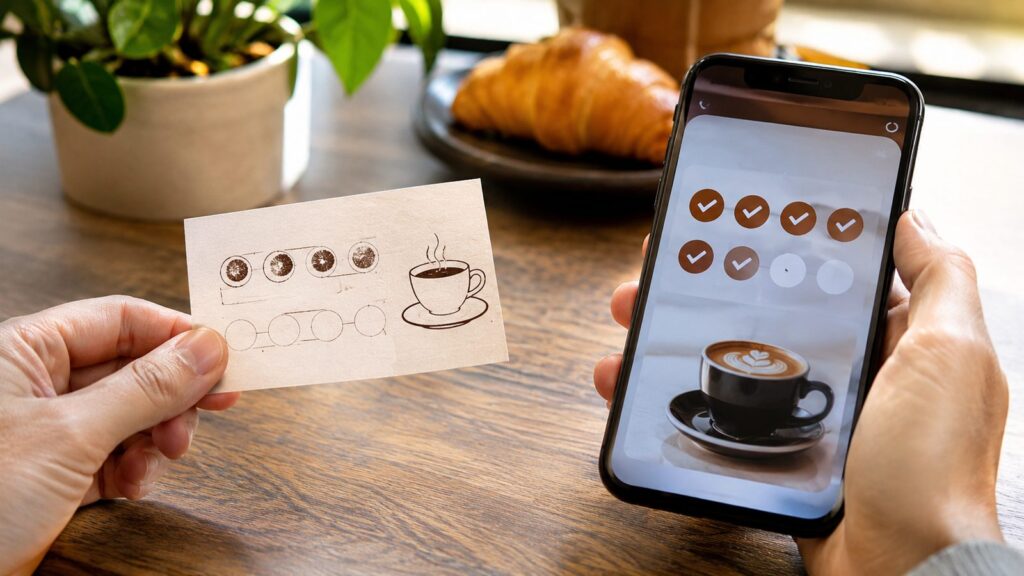
Paper cards are easy to distribute and don’t require customers to download an app. They’re useful for small operations with straightforward rewards. Their main drawbacks include lost cards, manual tracking, and limited customer data. Digital programs can track visits, purchases, and reward balances automatically. Some point-of-sale platforms offer built-in loyalty features, while other businesses use dedicated loyalty apps. Square, for example, offers loyalty features through its POS system.
| Feature | Paper cards | Digital programs |
|---|---|---|
| Customer setup | Minimal | Usually enrollment |
| Tracking | Manual | Software-based |
| Lost card risk | Higher | Account-based |
| Customer data | Limited | More detailed |
| Startup process | Simple | Requires configuration |
| Best fit | Small local operations | Growing businesses |
You don’t need to switch immediately. Start with a printed program and observe how customers use it. Consider digital tracking when manual administration becomes difficult.
How to Measure Whether Your Program Works
A loyalty program should produce measurable business results. Track performance before deciding whether to keep the reward or change its structure. Use a simple monthly record to understand customer participation. Monitor these useful measures:
- Enrollment: How many customers receive or register for cards?
- Completion rate: How many customers finish their cards?
- Repeat visits: Do participating customers return more often?
- Average transaction value: Does spending increase during qualifying visits?
- Reward cost: How much does the business spend on redeemed rewards?
- Incremental sales: Does the program generate purchases beyond normal customer behavior?
Compare participating customers with your normal sales patterns where possible. Don’t assume every repeat purchase happened because of the reward. Test different punch counts or reward limits before making permanent changes. Businvesty’s guide to marketing ideation and campaign testing offers a useful approach to measuring promotional ideas. You can also review its POS system guide when planning digital tracking and checkout procedures.
Legal Considerations for U.S. Businesses
Write your terms in plain language and display them before customers participate. Explain qualifying purchases, reward limits, expiration dates, exclusions, and redemption procedures. Make sure employees apply the same rules consistently. Gift cards and promotional rewards aren’t always treated the same under U.S. law. Federal Regulation E includes specific requirements for covered gift certificates and loyalty, award, or promotional gift cards. State laws may add further requirements concerning expiration, fees, cash redemption, and unclaimed property. Review the federal rules and your own state’s gift card statutes before you print terms. A free reward earned through purchases may receive different treatment from a prepaid gift card. Don’t assume that adding an expiration date or a no-cash-value statement automatically makes every restriction lawful. Ask a qualified attorney to review your program before publishing restrictive terms.
Kids’ and Classroom Reward Cards: Positive Ways to Use Them
Children’s reward cards work best when goals are specific, achievable, and encouraging. Teachers and parents can use them to reinforce reading habits, responsibility, kindness, and classroom participation. The goal should be recognizing progress rather than punishing mistakes.
Chore Reward Cards
Create a ten-star card for household responsibilities. Children can earn punches for completing agreed tasks, such as putting away toys or helping set the table. Rewards might include choosing a weekend activity or selecting a family movie.
Reading Reward Cards
Use twelve spaces to encourage regular reading. Award one punch after an agreed reading session or completed book, depending on the child’s age. A completed card could earn a library visit or extra reading time with a parent.
Positive Behavior Cards
Teachers can recognize helpful classroom actions and individual progress. Examples include sharing materials, listening during group activities, and helping classmates. Avoid removing earned punches because a child makes a later mistake. Let children help choose achievable rewards. Offer encouragement throughout the process rather than focusing only on completion. Keep expectations fair for different ages, abilities, and learning needs.
Frequently Asked Questions
What should a punch card template include?
A useful design includes your business name, reward offer, punch spaces, and redemption conditions. Add qualifying purchase rules and contact details when appropriate. Both sides should remain easy to read at wallet size.
How many punches should a loyalty card have?
Eight to twelve spaces work as a practical starting point for many small businesses. Coffee shops often choose ten spaces for a buy-nine-get-one-free offer. Service businesses can use fewer spaces when customers visit less frequently.
Can I make a punch card template for free?
Yes, you can start with free design options in Canva, Adobe Express, or Microsoft Word. Customize the wording, colors, logo, and punch spaces before exporting your file. Check the available template and export features before printing.
What is the best size for a printed card?
The standard U.S. business card measures 3.5 × 2 inches. It fits most wallets and card holders. Always confirm bleed and trim specifications with your chosen printer.
Can I use loyalty cards for children?
Yes, parents and teachers can use reward cards for chores, reading, and positive classroom behavior. Choose simple goals that children can understand and achieve. Use encouraging language and rewards suited to their age.
Can a business put an expiration date on rewards?
It depends on the type of reward and applicable laws. Prepaid gift cards, promotional rewards, and loyalty incentives can have different legal requirements. Review federal and state rules before adding expiration restrictions.
Start With a Simple Reward Card
A well-planned loyalty card gives customers a clear reason to return. Choose a manageable punch count, a reward that fits your margins, and terms that employees can explain. Start with one design, print a small batch, and measure how customers respond. For children, use the same simple structure to recognize effort and encourage positive habits. Keep goals achievable and celebrate progress along the way. A thoughtful design can support customer loyalty, household routines, and classroom motivation without complicated systems. —
