




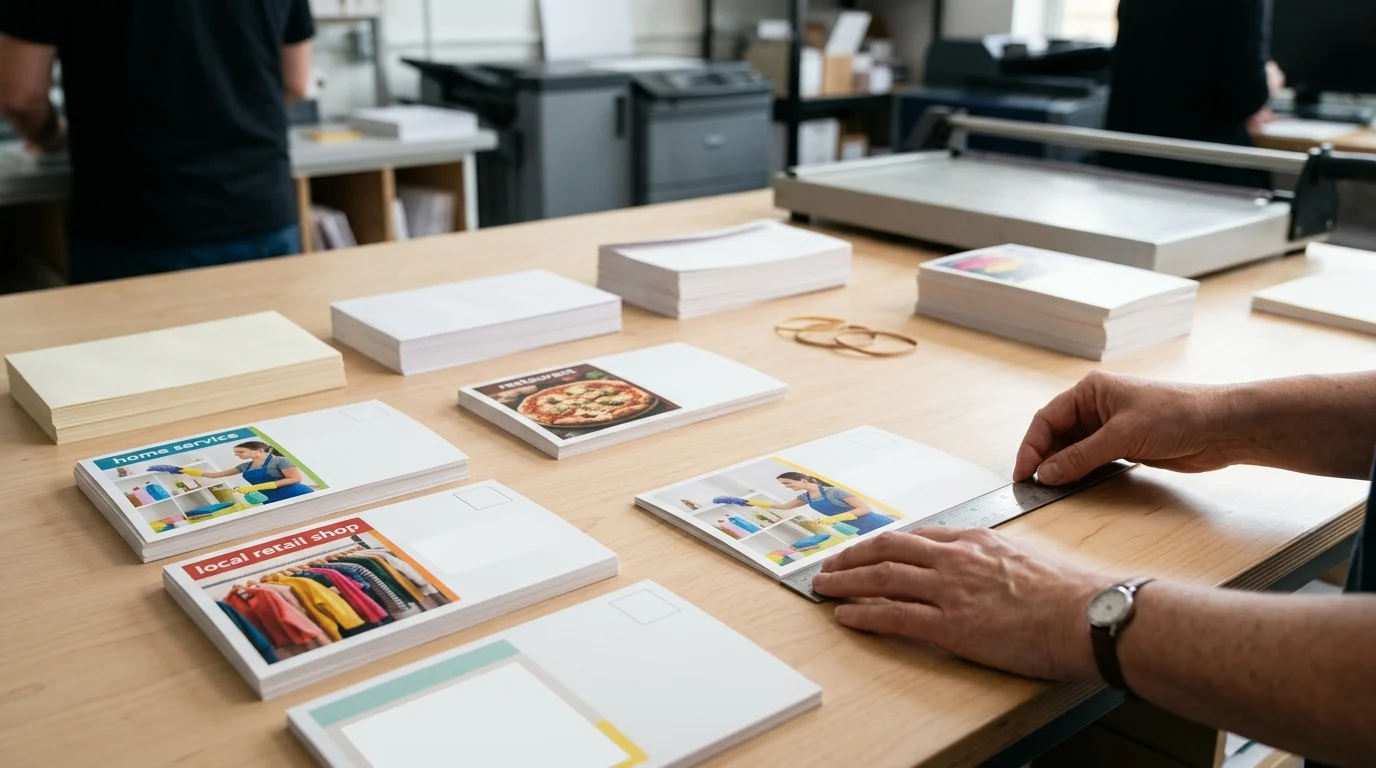
A useful postcard example should show more than attractive colors or clever wording. It should demonstrate what goes where and why each element matters. For U.S. businesses, the strongest cards pair one offer with one audience and one measurable action.
Direct mail can support local promotions, appointment generation, grand openings, customer win-backs, and real estate outreach. The format works best when readers understand the offer within seconds. This guide gives you adaptable examples, layout ideas, and mailing considerations for a U.S. campaign.
| Key Question | Practical Answer |
|---|---|
| Best message style | One offer, one benefit, and one clear action |
| Common business uses | Coupons, appointments, events, lead generation, reminders |
| Standard First-Class card size | Maximum 6 inches long by 4.25 inches high |
| Current single-piece U.S. card postage | $0.65 |
| EDDM Retail postage | $0.26 per eligible marketing-mail piece |
| Useful tracking methods | QR code, promo code, short URL, or dedicated phone number |
| Strongest design principle | Make the main benefit understandable within seconds |
Direct answer: A strong postcard example uses a bold headline, one relevant offer, brief supporting copy, and one measurable call to action. The front earns attention, while the reverse explains the offer, gives contact information, and leaves enough room for mailing requirements.
USPS says First-Class card-rate pieces must meet specific dimensions. Eligible pieces can measure no more than 6 inches long and 4.25 inches high. Larger pieces may still be mailed, but different postage rules can apply.
Postcard Example Structure That Works for Business Mail

Start the front with the result customers care about most. Add one strong visual that supports that result instead of competing with it. Keep secondary details away from the headline area.
Use the back for proof, conditions, contact details, and the next action. A short list can explain what customers receive without creating a wall of text. Leave adequate room for addressing, postage, and postal processing.
A simple planning formula is audience + problem + offer + action + tracking. That sequence forces every design choice to support a measurable goal. It also prevents a small mailpiece from becoming a miniature brochure.
1. Local Home Service Offer
A plumbing, HVAC, roofing, or cleaning company can lead with a specific seasonal service. The headline should name the benefit rather than introduce the company. A deadline gives the reader a reason to respond promptly.
Front copy.
- Save $50 on Your Fall HVAC Tune-Up
- Book Before November 15
- Keep Your System Ready for Colder Weather
Back copy.
- Includes system inspection and basic performance check
- Available for homes within the listed service area
- Schedule by phone or scan the QR code
This format suits businesses serving defined neighborhoods around a physical service area. USPS EDDM can help local companies select carrier routes and neighborhood demographics. Retail EDDM currently allows 200 to 5,000 pieces daily per ZIP Code.
2. Real Estate Seller Lead Mailer
Real estate agents can build the message around a home valuation or recent neighborhood sale. Local relevance matters more than a lengthy biography. Specific location references make the piece feel less generic.
Front copy.
- Curious What Your Home Could Sell For?
- Get a Local Pricing Review
- No Obligation Required
Back copy.
- Recent sales may have changed nearby property values
- Request a personalized market review
- Call, text, or scan the code to begin
The strongest version uses recognizable neighborhood details and an easy response method. Avoid promising a guaranteed selling price without supporting evidence. Track responses separately from other lead channels.
3. Restaurant Grand-Opening Promotion
A new restaurant needs a clear reason for nearby residents to visit. A limited opening offer can connect awareness with an immediate transaction. Keep food photography simple and easy to recognize.
Front copy.
- We’re Open in Your Neighborhood
- Get a Free Appetizer With Two Entrées
- Opening Week Only
Back copy.
- Show this card when ordering
- Include the location, operating hours, and expiration date
- Add a unique promotion code for tracking
Local businesses should coordinate offline promotion with their broader positioning. Businvesty’s guide to identifying market gaps explains why understanding unmet customer needs matters before promoting an offer. A campaign performs better when the message answers an existing local need.
4. Dental or Healthcare Appointment Offer
Healthcare-related mail should focus on a specific service and simple booking step. Avoid exaggerated medical claims or language that guarantees an outcome. Clear eligibility details can reduce unnecessary calls.
Front copy.
- New Patient Dental Exam Offer
- Convenient Local Appointments
- Call to Check Availability
Back copy.
- State exactly what the offer includes
- Add applicable restrictions or insurance information
- Provide a phone number and booking method
The design should emphasize trust and readability over aggressive sales language. Use a professional image and enough white space around the main offer. Review advertising requirements that apply to your profession and state.
5. Retail Coupon Campaign
Retailers can use physical mail to connect nearby households with an in-store promotion. The discount should be prominent enough to understand before reading supporting copy. A clear expiration date makes the offer easier to act upon.
Front copy.
- Save 20% on One Regular-Priced Item
- This Week at [Store Name]
- Bring This Card to Redeem
Back copy.
- Add exclusions in readable text
- Include the store address and operating hours
- Use a unique redemption code
Coupon campaigns become more useful when every redemption can be attributed correctly. Separate codes can compare neighborhoods, offers, or mailing dates. That information can improve the next campaign instead of relying on impressions.
6. Laundromat Customer-Acquisition Offer
Neighborhood laundry businesses can promote convenience instead of competing only on price. A wash-and-fold trial or loyalty offer gives residents a simple reason to visit. Nearby apartment buildings can be useful targeting areas.
Front copy.
- Take Laundry Off Your Weekend List
- Try Wash-and-Fold Service
- New Customers Save $10
Back copy.
- Explain minimum-order requirements
- List store hours and the redemption deadline
- Provide directions or a scannable code
Businvesty’s laundromat business guide also discusses local advertising, partnerships, and loyalty programs. Those channels can reinforce a direct-mail promotion. Repeated exposure often makes the physical offer easier to recognize.
7. Boba Shop Student Promotion
Food and beverage brands can use a visually simple offer aimed at a defined customer group. Students respond better to a concrete deal than a long brand introduction. Timing the drop around school schedules can strengthen relevance.
Front copy.
- Study Break?
- Buy One Drink, Get the Second 50% Off
- Monday Through Thursday
Back copy.
- Include participating hours
- State exclusions clearly
- Add the store address and offer code
Businvesty’s boba shop startup guide recommends combining local promotion with digital visibility and community activity. A mailed offer can support those channels rather than replace them. The same creative theme can appear across social posts and in-store signage.
8. B2B Consultation Offer
Business-to-business mail needs stronger relevance because generic promotion is easy to ignore. Lead with a costly problem that the recipient already recognizes. Keep the requested next step small.
Front copy.
- Spending Too Much Time on Manual Bookkeeping?
- Get a 20-Minute Process Review
- See Where Work Can Be Simplified
Back copy.
- Describe who the consultation suits
- Add one credible proof point
- Provide one booking method
Avoid placing several services on the same card. One problem creates a cleaner message and stronger measurement. Future mailings can target different services without confusing the original campaign.
9. Customer Win-Back Campaign
Existing customers already know the business, so the message can skip lengthy introductions. Reference the relationship without exposing sensitive information. Give the customer a practical reason to return.
Front copy.
- We’d Love to See You Again
- Enjoy $15 Off Your Next Visit
- Offer Ends December 15
Back copy.
- Explain how to redeem the offer
- Include relevant exclusions
- Give one booking or purchasing action
A win-back campaign should use a separate code from new-customer promotions. That distinction helps measure whether dormant customers returned because of the mailing. It also prevents acquisition and retention results from being mixed together.
How to Design the Front and Back
The front should answer one question: why should the recipient keep reading? Place the primary benefit where the eye lands first. Use contrast, readable type, and enough empty space to protect that message.
The reverse side handles supporting information and fulfillment details. Put the offer explanation, conditions, and action together so the reader does not hunt for them. Keep postal areas uncluttered and verify requirements before printing.
Current USPS guidance sets card-rate dimensions between 5 and 6 inches long. Height must fall between 3.5 and 4.25 inches for the First-Class card price. Thickness requirements also apply.
Choosing Between First-Class Mail and EDDM
First-Class mailing can suit personalized or targeted lists where each recipient has a known address. USPS currently lists a single-piece First-Class card at $0.65. Pricing can change, so confirm the rate before printing.
EDDM serves a different purpose because businesses select carrier routes instead of individual household names. USPS currently lists EDDM Retail Marketing Mail flats at $0.26 each. The service can filter routes using factors such as age, income, and household size.
Choose based on targeting needs rather than postage alone. A broad neighborhood offer may fit EDDM, while a customer win-back campaign needs a specific list. Your expected revenue per response should also influence that decision.
How to Measure Whether the Campaign Worked
Never send a large campaign without a way to identify responses. Use a dedicated promotion code, landing page, QR code, or trackable telephone number. Keep the response action simple enough to remember.
Calculate total campaign cost before judging performance. Include design, printing, postage, list expenses, and any discount redeemed by customers. Compare that amount with revenue and gross profit linked to the campaign.
Testing can reveal more than a single large mailing. Divide similar audiences between two offers or headlines while keeping other variables stable. The stronger response gives you evidence for the next round.
Common Mistakes to Avoid
Too much copy is one of the fastest ways to weaken a small-format advertisement. Readers should not need several minutes to discover the offer. Remove company history unless it directly strengthens trust.
Another mistake is asking for several actions at once. Avoid competing instructions such as call, visit, follow, subscribe, and download. Pick the action most closely connected to revenue or lead generation.
Businesses also lose useful data when every channel shares the same promotion code. Give direct mail its own response method whenever possible. That makes future spending decisions easier to defend.
FAQ About Postcard Examples
What is a good postcard example for a small business?
A good postcard example gives one audience a specific offer and one obvious next action. It uses short copy, readable design, and a measurable response method. Local service discounts, appointment offers, and event invitations are practical starting points.
What should I write on the front?
Lead with the main customer benefit or offer. Add a short supporting line that explains why the reader should care. Keep detailed terms and supporting information on the reverse side.
How much text should a business card mailer contain?
Use only the copy needed to explain the offer and action. Shorter text usually makes the main benefit easier to notice. Conditions should remain readable rather than being hidden in tiny type.
What size qualifies for the U.S. First-Class card price?
USPS sets specific dimensional limits for card-rate mail. The maximum is 6 inches long and 4.25 inches high. Pieces outside those limits may receive different mail classifications or pricing.
Is EDDM useful for local businesses?
EDDM can suit businesses that want broad neighborhood coverage without individual mailing lists. USPS allows route selection by location and selected demographic information. Restaurants, local services, retailers, and real estate professionals may find that approach useful.
Turn the Example Into a Measurable Campaign
Start with one customer group and one result you want from the mailing. Build the offer around that result, then remove anything that competes with it. Confirm postal specifications before approving the final print file.
Next, assign a unique response method and send a controlled first batch. Record calls, scans, visits, redemptions, revenue, and campaign cost. Use those results to improve the next offer instead of guessing.
