




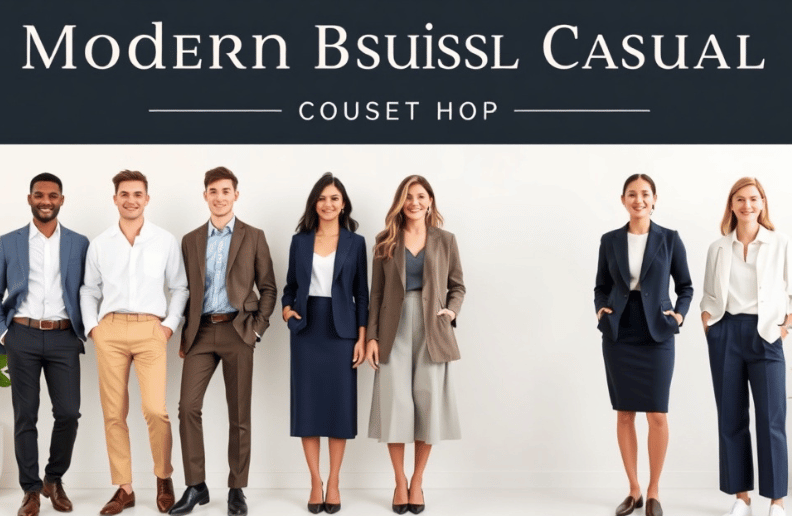
Modern business casual is a polished but relaxed way of dressing for work: tailored trousers or chinos instead of a full suit, a blouse, button-down or fine knit instead of a shirt and tie, and clean loafers, flats or minimal leather sneakers instead of formal dress shoes. The rule of thumb is simple: not too formal, not too casual, and always clean, pressed and well fitted.
This guide breaks down exactly what that means for men and women, with outfit formulas, shoe rules, seasonal adjustments, a starter capsule wardrobe and the mistakes that most often make an outfit look sloppy. Use it whether you work in an office full time, split your week between home and the office, or simply want to look right for a client meeting or interview.
What Is Modern Business Casual?
Traditional business casual meant khakis, a tucked-in shirt and leather shoes, with very little room for personality. The modern version keeps the same professional baseline but allows softer tailoring, stretch fabrics, knitwear, dark denim in many offices, and clean sneakers. It reflects how work has changed: hybrid schedules, video calls, more casual company cultures and a younger workforce that values comfort.
A modern business casual outfit usually has three ingredients:
- A structured element: a blazer, tailored trousers, a collared shirt or a midi skirt that signals “work”.
- A comfortable element: a knit, a stretch fabric or a relaxed shoe that keeps the look approachable.
- Clean finishing: neat grooming, pressed fabrics and shoes in good condition.
If an outfit has all three, it will almost always read as business casual, even if the individual pieces are simple.
Business Casual vs Smart Casual vs Business Formal
These terms are often confused. The table below shows where modern business casual sits.
| Dress code | Typical pieces | Jeans? | Sneakers? | Best for |
|---|---|---|---|---|
| Business formal | Full suit, tie, dress shirt; suit or formal dress and heels | No | No | Board meetings, law, finance, formal events |
| Modern business casual | Chinos or trousers, blazer optional, blouse or collared shirt, knitwear | Dark, clean jeans in many offices | Clean, minimal leather only | Most offices, client meetings, interviews at relaxed firms |
| Smart casual | Trendier pieces, polo or tee with blazer, relaxed dresses | Yes | Yes, fashion sneakers | After-work events, creative workplaces, social occasions |
When a dress code is unclear, aim for business casual and add a blazer. It is easier to take a layer off than to wish you had one.

Modern Business Casual for Men
For men, the goal is to look sharp but approachable. Think of the outfit from the top down and keep the color palette tight.
Shirts and tops
- Oxford cloth button-down shirts in white, light blue or pale stripes
- Plain dress shirts worn without a tie
- Quality polo shirts in solid colors for relaxed days
- Fine-gauge crewneck or V-neck sweaters layered over a shirt
- Merino turtlenecks in cooler months
Stick to white, navy, light blue, gray and earth tones such as olive, tan and rust. Avoid graphic tees, sleeveless tops and large logos.
Trousers
Chinos, wool or wool-blend trousers, stretch khakis and, where allowed, dark jeans without rips or fading are the core options. Fit matters more than brand: a straight or slightly tapered leg, no pooling at the ankle and a clean hem with little or no break. A quick visit to a tailor to shorten or taper trousers is one of the cheapest ways to look more expensive.
Blazers and layers
An unstructured blazer in navy, gray or tan is the single most versatile piece a man can own for business casual. It instantly lifts chinos and a knit, and works over a polo on warmer days. Cardigans, quarter-zip sweaters and, in more relaxed workplaces, a smart bomber or overshirt are good alternatives.
Shoes for men
| Wear | Avoid |
|---|---|
| Penny or tassel loafers | Running or gym sneakers |
| Clean, minimal leather sneakers | Flip-flops and slides |
| Derby shoes and brogues | Slippers or house shoes |
| Chelsea and chukka boots | Scuffed, worn-out or dirty shoes |
Match your belt to your shoes in color and finish, and choose socks that either match your trousers or add a subtle pattern.
Accessories and grooming
A leather belt, a simple watch, neutral socks and a tidy haircut or trimmed beard finish the look. Keep fragrance light: you should be noticed for your work, not from across the room.

Modern Business Casual for Women
Women’s business casual allows more variety in color, cut and silhouette, which is an advantage but can also make it harder to judge what crosses the line. Focus on structure, coverage and fabric quality.
Tops
- Silk-look or crepe blouses
- Classic button-down shirts
- Fine knit tops and lightweight sweaters
- Wrap tops with secure closures
- Structured, plain T-shirts under a blazer or cardigan
Neutrals, pastels and earth tones are easy to combine. Avoid crop tops, sheer fabrics without a layer underneath and very low necklines.
Trousers and skirts
Tailored trousers, wide-leg or palazzo trousers, culottes, pencil and midi skirts, and dark jeans where permitted are all good choices. High-waisted cuts elongate the leg and pair well with tucked blouses. Leggings work only as a layer under a long tunic or dress, not as trousers on their own.
Dresses
Midi dresses, shirt dresses, wrap dresses, knee-length A-line dresses and sweater dresses are all business casual staples. Add a blazer or cardigan to make a dress feel more office-ready, and skip anything very short, tight or embellished for evening.
Shoes for women
| Wear | Avoid |
|---|---|
| Ballet flats and loafers | Flip-flops and beach sandals |
| Low block heels and pumps | Very high party stilettos |
| Low wedges and ankle boots | Worn-out or dirty shoes |
| Oxfords and clean white leather sneakers | Bulky athletic trainers |
Accessories
Simple jewelry, a structured tote or handbag, a neutral scarf and a classic watch complete the look. If you wear makeup, keep it natural for day-to-day office wear.
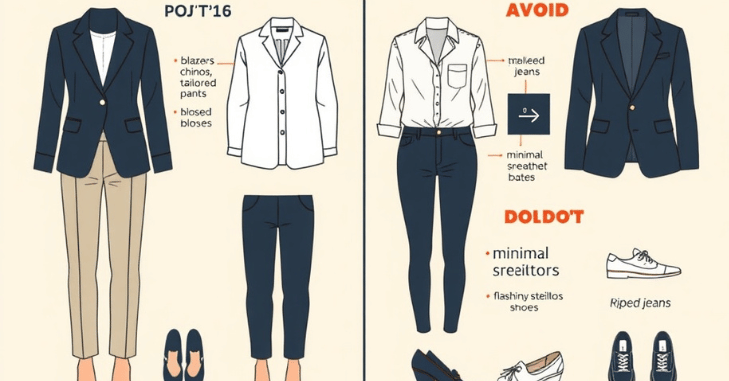
Outfit Formulas You Can Copy
These combinations work in most offices and are easy to remix with what you already own.
| Occasion | Men | Women |
|---|---|---|
| Everyday office | Oxford shirt + chinos + loafers | Blouse + tailored trousers + loafers |
| Client meeting | Blazer + dress trousers + derby shoes | Midi dress + blazer + pumps |
| Casual Friday | Polo + dark jeans + leather sneakers | Neutral sweater + dark jeans + flats |
| Winter day | Turtleneck + wool trousers + Chelsea boots | Sweater dress + opaque tights + ankle boots |
| Hybrid or video-call day | Knit sweater + chinos + minimal sneakers | Button-down + culottes + clean sneakers |
| Interview at a relaxed company | Navy blazer + light blue shirt + gray trousers + brogues | Blazer + shell top + tailored trousers + block heels |
Color Palette and Fabrics
A restrained palette is the secret to a wardrobe that mixes and matches. Build around black, navy, gray, white, beige and brown, then add olive, burgundy, soft blue or blush as accent colors. Avoid neon and very bright shades for everyday wear, or keep them to one small accent.
Fabric choice is where modern business casual differs most from the old version. Cotton, merino wool, linen blends and quality stretch fabrics keep you comfortable at a desk all day. Look for materials that resist creasing if you commute, and check care labels: pieces that need dry cleaning every time cost more over the year than machine-washable alternatives.

Seasonal Business Casual Tips
Summer
Choose linen and cotton blends, short-sleeved button-downs, breathable dresses and unlined loafers. Keep a light cardigan or blazer at your desk for air-conditioned offices. Open-toe shoes are acceptable in many workplaces if they look polished, but beach sandals are not.
Winter
Layer knits over shirts, switch to wool trousers and sweater dresses, and wear closed shoes or leather boots. A tailored wool coat looks far more professional over business casual than a sporty puffer, if you have the choice.
Spring and fall
These are the seasons for layering: lightweight blazers, long-sleeved shirts, fine knits and trench coats let you adjust as temperatures change through the day.
How to Build a Business Casual Capsule Wardrobe
You do not need a huge wardrobe. A small set of versatile pieces covers most weeks. Use this step-by-step checklist:
- Start with two or three neutral bottoms such as navy and gray trousers or chinos, plus one pair of dark jeans if your office allows them.
- Add five tops that all work with every bottom: shirts, blouses and fine knits in white, blue and one accent color.
- Invest in one great blazer in navy or charcoal that fits your shoulders properly.
- Choose two pairs of shoes, one dressier (loafers, pumps or derbies) and one relaxed (clean leather sneakers or flats).
- Add one or two layers: a cardigan or sweater and a seasonal coat.
- Fill gaps slowly. After a month, note what you reach for and what you lack before buying more.
With roughly a dozen pieces you can create far more outfit combinations than there are working days in a month, which keeps costs down and mornings simple.
Common Business Casual Mistakes to Avoid
Some common mistakes in business casual dressing are easy to fix once you notice them:
- Wearing athletic running shoes with tailored trousers
- Heavy perfume or cologne in a shared workspace
- Over-accessorizing with several statement pieces at once
- Wrinkled shirts or trousers, which undo an otherwise good outfit
- Ripped, faded or flashy jeans
- Ill-fitting clothes: sleeves too long, trousers pooling at the ankle or blazers tight across the back
- Ignoring your specific workplace: a tech startup and a bank can both say “business casual” and mean different things
How to Read Your Workplace Dress Code
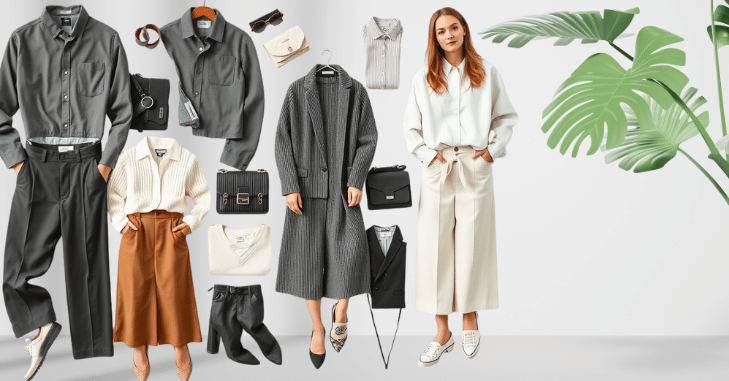
Written dress codes are often vague. Before your first week, look at photos on the company’s website or LinkedIn, and ask your recruiter or manager what people typically wear. In your first few days, dress one notch above what you expect, then adjust to match colleagues who are a level or two senior to you. On days with client meetings, presentations or interviews, err on the formal side.
Business Casual Across Different Industries
The same phrase can mean quite different things depending on where you work, so adjust the formulas above to your sector.
| Industry | What business casual usually looks like | Tip |
|---|---|---|
| Finance, law and consulting | Trousers, collared shirts or blouses, blazers most days; jeans rare | Keep a tie or structured jacket on hand for client visits |
| Tech and startups | Chinos or dark jeans, knits, clean sneakers | Dress up slightly for investor or customer meetings |
| Retail and hospitality management | Smart trousers, polo or blouse, comfortable leather shoes | Choose shoes you can stand in all day without looking sporty |
| Healthcare administration and education | Neat trousers or skirts, cardigans, low-heeled shoes | Prioritize practical, washable fabrics |
| Creative agencies | More color, pattern and trend pieces, often closer to smart casual | Keep one element tailored so the outfit still reads as work wear |
One more practical point: business casual on camera follows slightly different rules. Solid, mid-tone colors look better on video than bright white or tight stripes, which can shimmer on screen. Since only your top half is usually visible, a collared shirt, blouse or fine knit is enough, but dress fully anyway so you can stand up or switch to an in-person meeting without a scramble.
How to Keep Work Clothes Looking Sharp
Even well-chosen pieces look tired if they are not cared for, and wrinkles or pilling are among the first things people notice. A few simple habits make a big difference:
- Hang shirts, blouses and trousers straight after wearing so creases drop out overnight.
- Fold knitwear instead of hanging it, which stretches the shoulders.
- Use a handheld steamer for quick touch-ups before leaving home.
- Rotate shoes so leather can dry out between wears, and use shoe trees for leather pairs.
- Remove pilling from sweaters with a fabric shaver and treat stains promptly.
- Wash dark jeans and trousers inside out in cold water to slow fading.
These habits extend the life of each piece, so your capsule wardrobe keeps looking crisp for longer and you replace items less often.
Frequently Asked Questions
Are jeans acceptable for modern business casual?
In many workplaces, yes, if they are dark, clean, well fitted and free of rips or heavy fading. Pair them with a blazer, collared shirt or smart knit to keep the look professional. Check your company’s policy, as some offices still exclude denim.
Can I wear sneakers with business casual?
Clean, minimal leather sneakers in white, black or neutral colors are widely accepted in modern business casual. Avoid running shoes, gym trainers and anything scuffed or brightly colored. When meeting clients, loafers or leather shoes are the safer choice.
Is a polo shirt business casual?
A solid-color polo in a quality fabric is business casual in most offices, especially on relaxed days or in warm weather. Add chinos and loafers rather than shorts or athletic shoes, and avoid polos with large logos.
Do I need a blazer for business casual?
A blazer is not required, but it is the easiest way to make an outfit look more professional. Keeping one at your desk lets you dress up quickly for an unexpected meeting.
What should I wear to a business casual interview?
Dress slightly above the company’s everyday standard. For men, a blazer, collared shirt, tailored trousers and leather shoes work well; for women, a blazer with a blouse and trousers or a knee-length or midi dress with closed shoes is a safe choice.
Bottom Line on Modern Business Casual
Modern business casual comes down to fit, clean finishing and a few versatile pieces that work together. Start with neutral trousers, a handful of shirts or blouses, one good blazer and two pairs of polished shoes, then adjust to your workplace. If you are interested in workplace topics beyond what to wear, read our guide Busser Job Explained: Duties, Skills, Work Environment, Salary Insights, and Career Growth Opportunities, or browse more practical guides in our Small Business category.
