




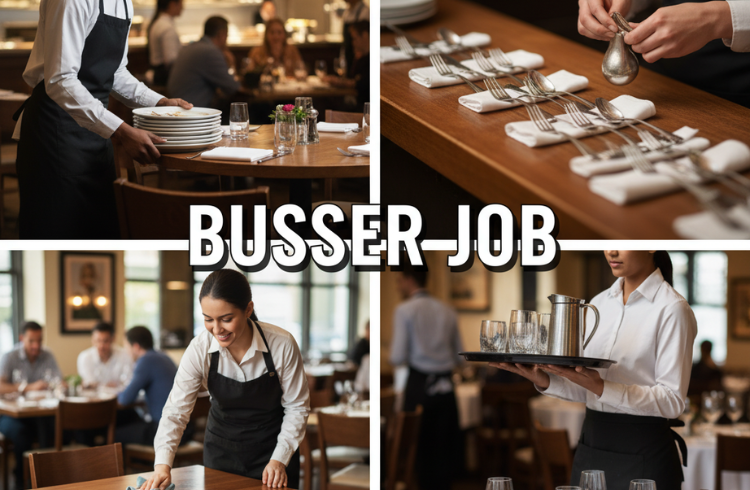
Busser Job
The hospitality industry thrives on teamwork. While servers and chefs often take the spotlight, another role quietly ensures smooth operations and excellent guest experiences—the busser. Also known as a dining room attendant or busboy/busgirl, a busser plays a vital role in restaurant operations by maintaining cleanliness, supporting servers, and ensuring guests enjoy a seamless dining experience.
This guide offers a comprehensive overview of the busser job, covering daily duties, required skills, workplace environment, salary expectations, and long-term career prospects. Whether you’re considering a career as a busser or want to understand this critical role in hospitality, this article breaks everything down in detail.
| Category | Key Details |
| Primary Duties | Clearing tables, resetting dining areas, assisting servers, carrying dishes, refilling water, and restocking supplies. |
| Essential Skills | Attention to detail, teamwork, time management, stamina, communication, and adaptability. |
| Work Environment | Casual & fine dining restaurants, hotels, resorts, cruise ships, catering; fast-paced and physically demanding. |
| Salary Range | $10–$15/hour; $22,000–$32,000 annually (full-time); plus shared tips ($50–$150 weekly). |
| Perks | Flexible hours, free staff meals, discounts, teamwork experience, and entry-level friendly. |
| Challenges | Physically tiring, lower base pay, high-pressure rushes, repetitive tasks. |
| Career Growth | Promotion to server/bartender roles, management positions, catering/banquet services, and potential restaurant ownership. |
What is a Busser?
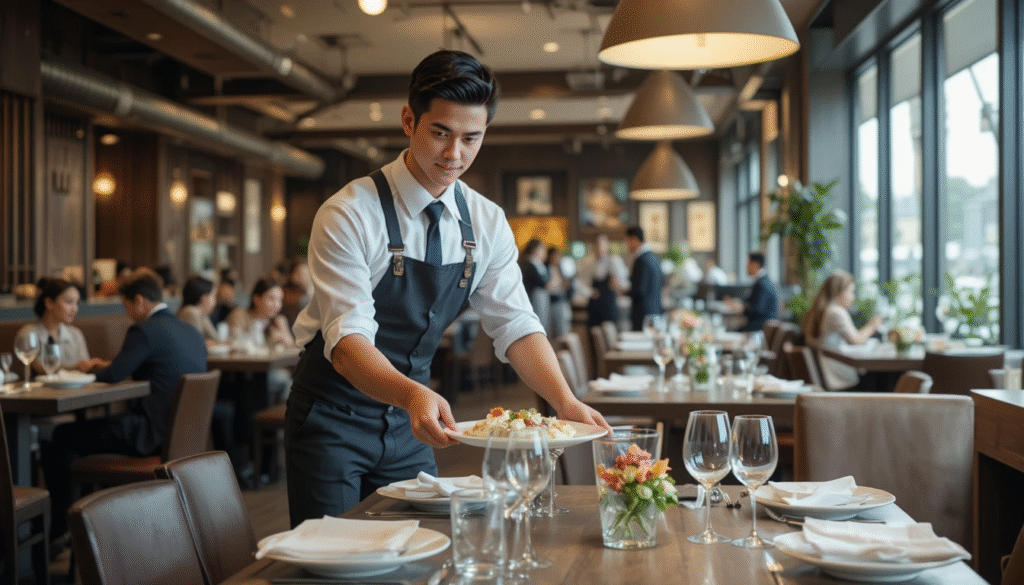
A busser is an entry-level restaurant worker who assists servers and managers in maintaining the dining area. Their primary responsibilities include:
- Clearing and resetting tables.
- Refilling water glasses and assisting with beverages.
- Carrying dishes back to the kitchen.
- Restocking napkins, silverware, and condiments.
- Supporting the front-of-house staff during peak hours.
Though they may not directly handle orders or payments, bussers are essential to keeping a restaurant efficient and welcoming.
Core Duties of a Busser
The daily responsibilities of a busser can vary depending on the size and type of establishment. However, typical duties include:
1. Table Maintenance
Bussers clear dirty dishes, sanitize surfaces, and reset tables with clean utensils and linens. This ensures quick turnover and a positive experience for the next set of guests.
2. Assisting Servers
Servers often rely on bussers to refill drinks, deliver bread baskets, or bring extra utensils. By lightening the workload, bussers allow servers to focus on customer service.
3. Kitchen Support
Bussers help carry dishes back to the kitchen and sometimes assist dishwashers by sorting plates, glasses, and cutlery. This behind-the-scenes contribution is critical during busy shifts.
4. Guest Comfort
In higher-end restaurants, bussers may discreetly remove empty plates, refresh water glasses, or provide additional napkins to improve the guest’s dining experience.
Essential Skills for Bussers

Succeeding as a busser requires more than physical energy. Employers value a mix of soft and hard skills:
- Attention to Detail: Tables must be spotless, utensils must be aligned, and glasses must be polished.
- Time Management: Bussers often handle multiple tables at once.
- Teamwork: Close collaboration with servers, hosts, and kitchen staff is crucial.
- Stamina: The role is physically demanding, requiring long hours on your feet.
- Communication: Clear interaction with team members prevents service errors.
- Adaptability: Bussers need to stay calm and efficient during high-volume rushes.
Work Environment
1. Types of Establishments
Bussers are employed across a variety of settings:
- Casual dining restaurants.
- Fine-dining establishments.
- Hotels and resorts.
- Cruise ships.
- Catering services.
2. Work Hours
Schedules often include evenings, weekends, and holidays since these are peak dining times. Shifts can be long and physically demanding, but they also provide valuable experience for those pursuing a career in hospitality.
3. Challenges
The work environment can be hectic, especially in busy restaurants. Bussers often juggle clearing multiple tables, assisting servers, and meeting cleanliness standards simultaneously.
Salary Insights
While the busser role is considered entry-level, it offers competitive pay in relation to experience and location. Bussers may also receive indirect benefits, such as tips shared by servers.
Factors Affecting Pay:
- Geographic location: Higher wages in urban areas or upscale dining.
- Type of restaurant: Fine dining usually pays better than casual dining.
- Experience: Seasoned bussers may receive higher base pay or better tip-outs.
- Shift times: Late-night or weekend shifts can include higher tip pools.
Average Busser Salary (U.S.)

| Factor | Typical Range | Notes |
| Hourly Wage | $10 – $15/hour | Varies by state and type of restaurant. |
| Annual Salary (Full-time) | $22,000 – $32,000 | Higher in metropolitan areas or upscale venues. |
| Tips (Shared) | $50 – $150/week | Dependent on the servers’ sales and restaurant policy. |
| Additional Perks | Free meals, flexible hours, staff discounts | Common in restaurants and hotels. |
Career Growth Opportunities
While many view bussing as a temporary job, it can serve as a stepping stone to higher positions in the hospitality industry.
1. Moving to Server or Bartender Roles
After gaining experience, bussers often transition into server or bartender positions, which typically offer higher pay through tips.
2. Advancement into Management
With dedication and experience, bussers may rise to supervisory or managerial roles such as dining room manager or restaurant assistant manager.
3. Specialized Roles in Hospitality
Some bussers pursue careers in catering, hotel, banquet services, or cruise ship dining operations.
4. Long-Term Career Paths
Ambitious individuals can eventually open their own restaurants, pursue culinary training, or enter hospitality management programs.
Advantages of Being a Busser
- Entry-level friendly: No degree required.
- Team-oriented work: Build collaboration and communication skills.
- Flexible scheduling: Ideal for students or part-time workers.
- Growth opportunities: Valuable stepping stone to higher-paying hospitality roles.
Challenges of the Busser Job

- Physically demanding: Long shifts and constant movement.
- Lower base pay: Relies heavily on tip sharing.
- High pressure: Busy environments can be stressful.
- Repetitive tasks: Work can feel monotonous without clear career goals.
Professional Insights
Hospitality experts often highlight the busser role as a foundational job. Managers emphasize that a reliable busser can significantly enhance customer satisfaction by ensuring faster service and maintaining a cleaner dining environment. Former bussers often credit the role with teaching them discipline, customer awareness, and teamwork.
Conclusion
The busser job may not be glamorous, but it is a cornerstone of the restaurant industry. By mastering duties such as table maintenance, teamwork, and time management, bussers acquire skills that open the door to higher-paying and more advanced positions in hospitality.
With dedication, what begins as an entry-level role can become a stepping stone to positions such as servers, bartenders, managers, or even restaurant ownership. If you’re looking to start a career in the hospitality sector, becoming a busser is one of the best first steps you can take.
Want to know about 5 Safety Investments That Protect Your Business Properties and Assets Check out our Small Business category.
FAQs
A busser supports servers and restaurant staff by clearing dirty dishes, resetting tables, refilling drinks, and maintaining a clean and organized dining area.
No degree is required. Most bussers only need a high school diploma or less. The role relies more on work ethic, teamwork, and the ability to handle a fast-paced environment.
On average, bussers earn between $10 and $15 per hour in the U.S., with total income rising when tip pooling is included.
Bussers commonly work evenings, weekends, and holidays, as these are peak dining times. Shifts can range from 4 to 8 hours, depending on the restaurant.
