




In today’s fast-paced business environment, a well-organized and efficient document infrastructure is no longer a luxury—it’s a must. Think about it: how much time and resources does your office spend on managing documents? From printing and scanning to storage and disposal, inefficient processes can lead to wasted time, increased costs, and even security risks.
In this comprehensive guide, we’ll walk you through the essential steps to optimize your office’s document infrastructure, transforming it from a potential bottleneck into a powerful engine for productivity. Let’s dive in and discover how to streamline your workflow and boost your bottom line!
Understand Your Current Document Workflow
Before you can optimize anything, you need to understand how things currently operate. Take a close look at your office’s document lifecycle. Where do documents originate? How are they printed, copied, and scanned? Where are they stored—both physically and digitally? Who handles them at each stage?
Identifying the pain points and bottlenecks in your existing workflow is the crucial first step. Talk to your team members, observe their processes, and gather data on printing volumes, paper usage, and the time spent on document-related tasks. This initial assessment will provide valuable insights into areas that need improvement and lay the foundation for a more efficient system.
Read more: ATM Business
Implement a Robust Document Management System (DMS)
In the digital age, relying solely on paper-based systems is no longer sustainable or efficient. A well-implemented Document Management System (DMS) can revolutionize how your office handles information. A DMS provides a centralized and secure repository for all your digital documents, making it easy to store, organize, search, and retrieve files.
Imagine being able to instantly find any document with a simple keyword search, eliminating the time wasted searching through filing cabinets. Beyond accessibility, a DMS often offers features like version control, audit trails, and user permissions, enhancing collaboration and security. Investing in the right DMS for your business needs is a significant step towards optimizing your document infrastructure.
Optimize Your Printing and Copying Processes for Efficiency
Printing and copying are still essential tasks in most offices, but they can also be significant sources of waste and expense if not managed properly. Start by assessing your printing needs. Are there opportunities to reduce unnecessary printing through digital workflows and clear printing policies?
Consider implementing duplex printing as the default to cut paper consumption in half. Regularly review your printer fleet. Are you using outdated or inefficient machines? Consolidating devices and investing in energy-efficient models can lead to substantial cost savings. Furthermore, establish clear guidelines for printer usage and encourage employees to think before they print.
Ensure Regular Copier Maintenance to Avoid Interruption
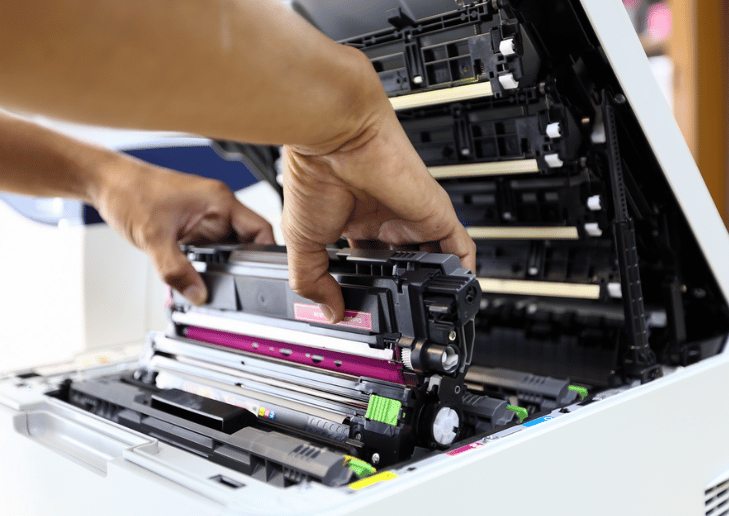
Your office copiers are vital pieces of equipment, and neglecting their maintenance can lead to frustrating downtime and costly repairs. Implementing a schedule for regular copier maintenance is crucial for ensuring their longevity and optimal performance. This includes routine cleaning, toner replacement, and addressing any minor issues before they escalate.
Consider copier maintenance services from professionals, like Copiers Plus of Florida Inc., who can provide expert care and preventative maintenance. Regular scheduling will minimize disruptions to your workflow and maximize the lifespan of your valuable equipment, ensuring consistent productivity and predictable operational costs.
Leverage Managed Print Services for Optimal Performance
For a more comprehensive approach to optimizing your printing environment, consider exploring managed print services. These services go beyond simply supplying printers and ink. They involve a third-party provider taking over the management of your entire print infrastructure, including printers, supplies, maintenance, and support.
Managed print services can offer numerous benefits, such as reduced printing costs through optimized device usage and automated supply replenishment, improved efficiency by freeing up your IT staff from printer-related issues, and enhanced security through features like print tracking and secure release. This holistic approach can significantly streamline your document workflow and provide valuable insights into your printing habits.
Implement Clear Document Retention and Disposal Policies
Finally, a well-optimized document infrastructure includes clear policies for document retention and disposal. Determine how long different types of documents need to be kept to comply with legal and regulatory requirements.
Establish a secure and efficient process for disposing of documents that are no longer needed, especially those containing sensitive information. Implementing these policies ensures compliance, frees up valuable storage space, and reduces the risk of data breaches.
Optimizing your office’s document infrastructure is an ongoing process, but the benefits are well worth the effort. From understanding your current workflow to optimizing printing processes, you can create a more efficient, cost-effective, and secure environment for managing your critical business information. Take the first step today, and you’ll be well on your way to building a future-ready document infrastructure that empowers your team and drives your business forward!
Apart from that if you want to know about “Is a Checking Account Necessary?” then please visit our “Small Buisness” Category.
