





Introduction
Knowing what Is the Retail Price is important for both buyers and sellers. Customers pay the retail price after a markup is applied to the product’s base cost. This markup covers business expenses like rent, salaries, and marketing while ensuring profit. For instance, the retail price of a product that costs $50 and has a 40% markup is $70.
Various factors influence retail price, such as production costs, market demand, and seasonal changes. Understanding what Is the Retail Price is helps consumers make smarter purchases and allows businesses to set competitive and fair prices, adapting to market conditions and customer needs effectively.
| Basics | Summary |
| Retail Price | The price customers pay is the product cost plus the markup. |
| Markup Purpose | Covers business costs and ensures profit. |
| Pricing Formula | Retail Price = Cost + (Cost × Markup %). |
| Example | $50 cost with 40% markup = $70 retail price. |
| Cost of Goods | Expenses for the production or purchase of items. |
| Market Demand | High demand can increase retail prices. |
| Wholesale Price | The price retailers pay suppliers is usually lower than the retail price. |
| Retail vs. Wholesale | Retail includes markup; wholesale is the base cost. |
| Price Changes | Influenced by seasonality, location, and supply. |
| Online Retail | Lower overhead allows more flexible pricing. |
| In-Store Retail | Higher expenses can lead to higher prices. |
| Inventory Clearance | Prices drop during sales or to clear excess stock. |
| Consumer Awareness | Understanding price helps avoid overpaying. |
| Seller Advantage | Pricing method helps maintain profits and compete. |
| Budgeting | Knowing prices aids consumers in managing expenses. |
| Informed Decisions | Transparent pricing promotes better buying and selling choices. |
What Is the Retail Price ? How Is Retail Price Calculated?
Retail price is calculated by adding a markup to the base or wholesale cost of the product. The markup ensures businesses cover expenses like rent, salaries, marketing, and logistics. It also guarantees profit. If a product costs $60 and the markup is 30%, the price becomes $78. Understanding what Is the Retail Price is helps sellers price fairly and lets buyers understand how much of their money goes toward the product’s value.
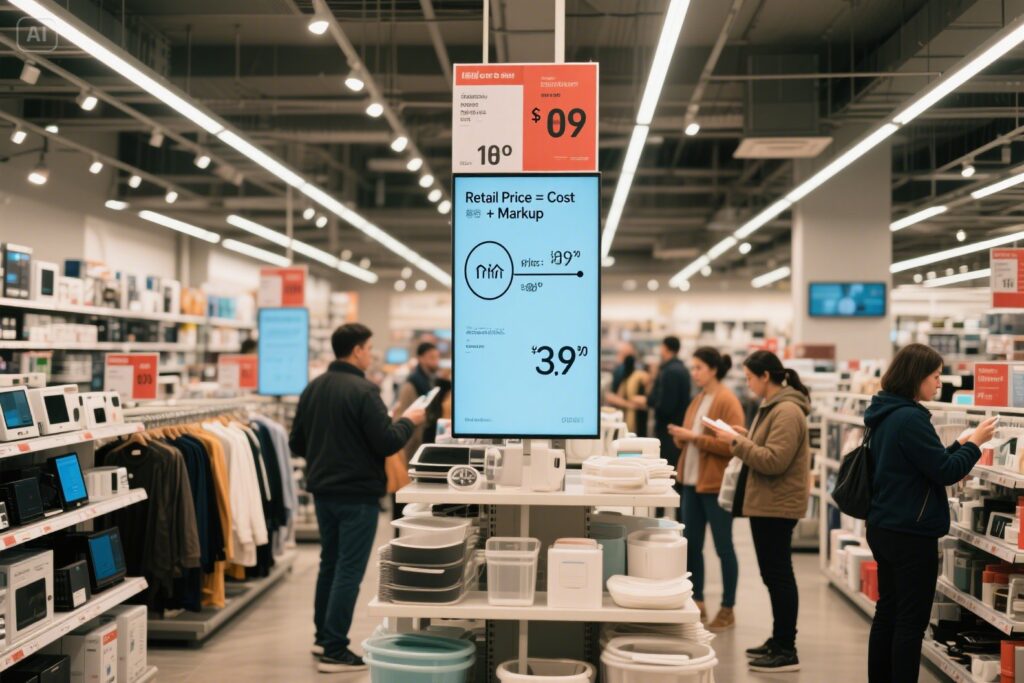
Formula for Retail Price
Retail Price = Cost Price + (Cost Price × Markup Percentage)
Example: The retail price is equal to $50 + ($50 × 0.40) = $70 if the cost is $50 and the markup is 40%. This formula allows sellers to remain profitable while being transparent and competitive. Knowing how to use this formula also helps businesses evaluate their pricing structure and adjust as needed to fit market conditions and customer expectations more effectively and efficiently. You can run the same sum for any cost and markup with a markup calculator, which shows each step of the working.
Factors That Affect Retail Price
Several essential factors influence how retail prices are set. These factors vary by industry and market type. Businesses must carefully consider each when deciding their final pricing.
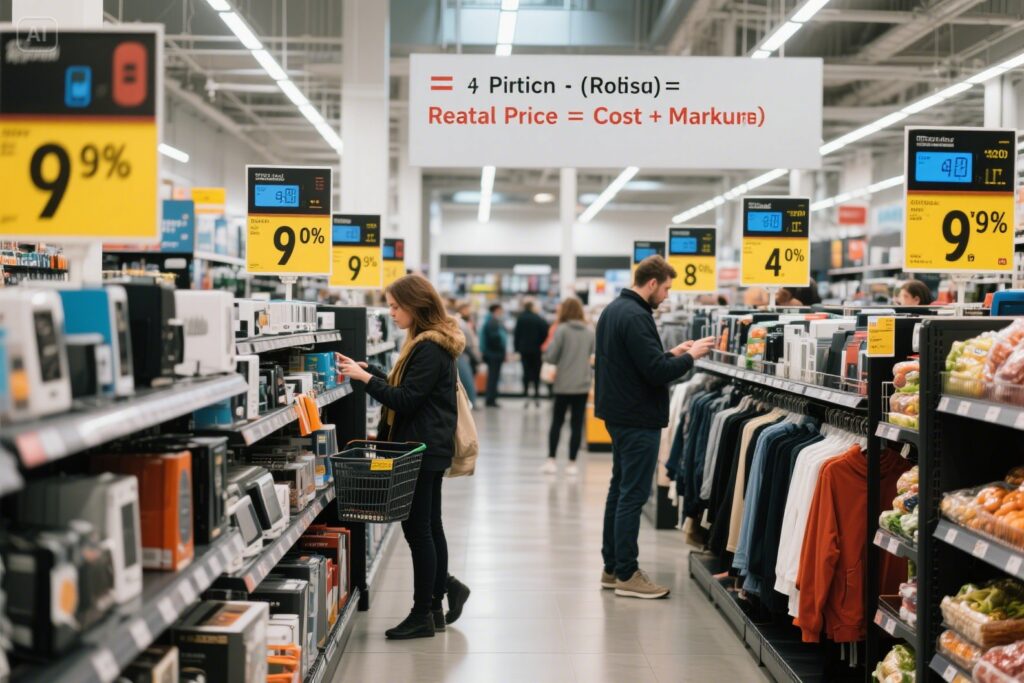
Cost of Goods Sold
This is the amount spent on producing or purchasing products. If raw materials, manufacturing, or shipping costs increase, retail prices must go up to keep profit margins stable. These rising costs are often passed on to the customer. Understanding what Is the Retail Price is also means understanding the production and logistics expenses hidden behind the tag attached to any product we choose to buy.
Market Demand
Market demand plays a significant role in pricing. Sellers frequently increase prices when a product gains popularity or when supply becomes scarce. People are more inclined to spend more when there is high demand. Retailers must keep an eye on trends in order to modify prices appropriately. This enables them to respond to customer interest while maximizing revenue. Knowing retail price involves knowing that pricing often reflects demand pressure more than just product cost.
Retail Price vs. Wholesale Price
What Is the Retail Price, and how does it compare to the wholesale price? Wholesale price is what retailers pay suppliers, often in bulk. Retail price is what the consumer pays in-store or online. The markup is what separates the two prices. Business expenses and earnings are included in the retail price.
While wholesale pricing is for business transactions, retail pricing represents the final exchange between business and buyer for everyday consumer goods. Online sellers often have lower operating costs. They don’t pay for storefront rent or as many staff members. This allows for more competitive pricing.
When Do Retail Prices Drop?
Retail prices drop for several reasons, usually to boost sales or make room for new inventory. Sales promotions, seasonal clearances, and excess stock all lead to temporary price reductions. This makes retail pricing flexible over time. Understanding retail price includes knowing that what you pay today might change tomorrow. Shopping during holiday deals or off-season periods is a smart way to benefit from lower retail pricing strategies.
Key Benefits
Knowing how retail pricing works offers value for both buyers and sellers:
- Helps consumers avoid overpaying for everyday products
- Assists businesses in setting sustainable price points
- Makes budgeting easier for frequent shoppers
- Encourages more brilliant timing for seasonal purchases
- Builds awareness of the supply chain and cost breakdown
When you fully understand retail price, you can make more informed decisions, whether you are trying to sell products for a profit or looking to buy something at a fair and reasonable price.
Conclusion
Understanding what Is the Retail Price is empowers both buyers and sellers to make informed decisions. It reflects not just the product’s base cost but also covers business expenses and profit margins. Seasonal patterns, production costs, and market demand are some of the factors that affect pricing. By grasping these concepts, consumers can avoid overpaying, and businesses can set fair, competitive prices that respond to market changes. This information encourages openness and more intelligent purchasing practices.
Want to know about “Chick-fil-A Employee with a Proven Track Record of Strong Work Ethic, Team Leadership, and a Commitment to Service Excellence” Check out our “Small Business” category.
FAQs
Retail price is the final amount a customer pays, which includes the product’s cost plus a markup to cover business expenses and generate profit.
Retail price is calculated by adding a percentage markup to the product’s base cost, ensuring the business covers costs and earns profit from each sale.
Retail prices depend on production costs, market demand, seasonal trends, and overhead expenses such as rent and salaries, which businesses consider when setting prices.
